

A Step-by-Step Guide to Bob Proctor’s Money Mindset Principles
Most human beings who prefer to enhance their monetary state of affairs start with the identical question:
“How can I get greater money?”
They appear for a higher-paying job, a worthwhile commercial enterprise idea, a facet hustle, higher investments, or a way to generate passive income.
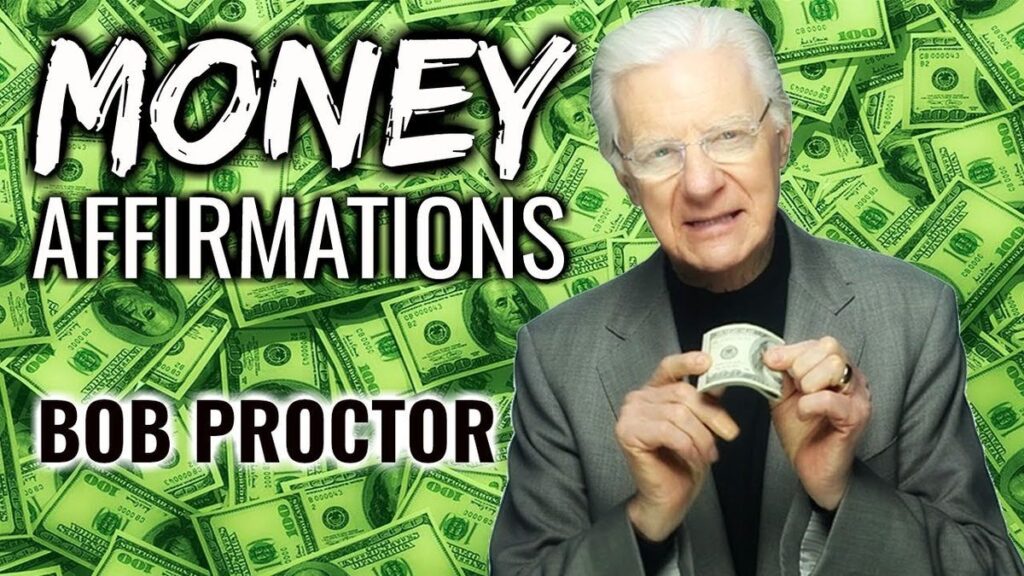
But personal-development instructor Bob Proctor approached the problem from an exclusive direction. His work emphasized altering the character at the back of the results—developing a superior self-image, increasing one’s thinking, placing significant goals, and cultivating habits that assist success. He grew to be extensively regarded for his work in prosperity and private development, together with his look in The Secret.
The deeper question, therefore, isn’t always only:
“How do I get greater money?”
It is:
“Who do I want to end up to create, manage, and responsibly acquire extra wealth?”
That shift can absolutely trade how you method monetary success.
The Difference Between Wanting More Money and Becoming More Capable
Wanting extra cash is easy.
Becoming successful of producing extra cash requires work.
Imagine two human beings who each favor to earn $10,000 per month.
Person A spends most of the day wondering about the quantity of cash they want. They watch motivational videos, visualize success, and hope for an opportunity.
Person B asks:
What treasured abilities can I develop?
What troubles can I solve?
How can I turn out to be greater treasured to employers or customers?
How can I enhance my communication?
How can I study to sell?
How can I manipulate cash better?
How can I construct belongings over time?
Person B is centered on turning into extra capable.
This is the sensible aspect of the philosophy related with Proctor: the economic end result have to be supported through non-public growth.
Bob Proctor and the Power of Personal Transformation
Bob Proctor spent a long time instructing private improvement and prosperity principles. Penguin Random House describes him as a speaker, author, consultant, coach, and mentor who labored in private improvement for extra than forty years.
His story additionally grew to become phase of his message. According to JA Worldwide, Proctor struggled financially in his early maturity and later credited analyzing Napoleon Hill’s Think and Grow Rich as an essential have an effect on on his transformation.
His philosophy positioned huge emphasis on the mind, beliefs, goals, and self-image.
The sensible lesson is well worth keeping apart from the greater mystical claims on occasion related with manifestation:
Your ideas do not magically credit cash into your financial institution account. But your beliefs can impact the decisions, habits, confidence, persistence, and moves that have an effect on your monetary results.
What Does “Money Is Energy” Really Mean?
You may additionally have heard the phrase:
“Money is energy.”
This phrase is frequent in motivational, spiritual, and personal-development communities.
It is vital to apprehend that this is now not a scientific definition of money. Economically, cash features as a medium of exchange, a unit of account, and a keep of value.
However, “money is energy” can be understood as a metaphor for motion and exchange.
Money continuously strikes between human beings and organizations:
Customer → Business → Employee → Supplier → Investor → Business
When you earn money, you obtain fee created elsewhere.
When you spend money, you switch buying energy to anybody else.
When you make investments money, you try to put capital to work with the expectation of future returns.
From this perspective, the beneficial query becomes:
“How can I emerge as higher at developing cost and directing cash intelligently?”
Money Follows Value Creation
One of the most sensible classes you can take from a wealth mind-set is that cash commonly follows value.
Businesses make cash by means of fixing problems.
Employees earn salaries by using supplying precious abilities and labor.
Consultants earn cash through imparting expertise.
Entrepreneurs create merchandise and offerings that clients are inclined to pay for.
Investors allocate capital in the expectation of future returns.
This leads to an effective question:
“What can I emerge as distinctly accurate at?”
Instead of focusing completely on incomes more, reflect on consideration on growing capabilities such as:
- Sales
- Marketing
- Programming
- Leadership
- Copywriting
- Finance
- Negotiation
- Management
- Design
- Communication
- Data analysis
- Entrepreneurship
The extra correctly you can remedy precious problems, the increased your workable monetary cost becomes.
Your self-image might influence your financial decisions
Another key component in Proctor’s teachings was self-image.
Self-image is fundamentally how you perceive yourself.
Consider someone who continually tells themselves:
“I’m terrible with money.”
- That notion has the potential to impact conduct.
- They may resist knowing about their finances.
- They may refuse to prepare a budget.
- They may be uneasy discussing salary.
- They may believe that investing is solely for the rich.
Consider someone who thinks
“I’m learning to become financially responsible.”
That person might be more open to:
Read financial literature, manage costs, learn about investing, acquire new skills, negotiate compensation, and seek expert guidance as needed.
The change isn’t magical.
The difference is in behavior.
Become the person who can handle more money
Imagine donating $100,000 to two people.
One individual lack financial awareness, spends impulsively, takes excessive risks, and has no long-term strategy.
The other is knowledgeable in budgeting, taxation, investment concepts, risk management, and long-term planning.
The same sum of money has been placed in two separate hands.
The consequences might be quite different.
This illustrates a key principle:
Having money and knowing how to manage money are not the same thing.
As a result, if you desire more riches, you must first learn how to manage it.
Learn:
- How to budget.
- How to Save
- How to Manage Debt
- How investment works.
- How do taxes effect income?
- How to Evaluate Financial Risk
- How to Avoid Scams.
- How to create various income streams properly.
The objective is not just to acquire more money.
The objective is to develop the ability to appropriately handle and build financial resources.
Stop asking, “How Can I Get Rich Quickly?”
The internet is full of promises of instant fortune.
However, long-term financial success is rarely achieved with a single method.
Rather than asking:
“How can I get rich quickly?”
Ask:
“What valuable problem can I learn to solve?”
Then, ask:
“How can I become exceptionally good at solving it?”
These questions move your focus from wishful thinking to skill improvement.
For example, a person interested in photography may learn:
Our services include commercial and product photography, video production and editing, digital marketing, and client acquisition.
A photographer who merely has an expensive camera may struggle to establish a company.
A photographer who is knowledgeable in photography, marketing, sales, branding, and customer service has a far better base.
Your habits determine what happens to your money
Raising your income is simply one aspect of financial success.
What happens after you receive the money is just as significant.
Assume somebody makes $5,000 every month.
They boost their earnings to $8,000.
However, they instantly upgraded their lifestyle:
costly automobile, costly residence, frequent luxury purchases, needless debt, and increased monthly costs.
Their income has risen by $3,000, but their financial situation may not improve considerably.
This is why becoming financially mature is important.
A stronger strategy might include:
Earn more, control your spending, save, invest wisely, build assets, and repeat the process.
Create a wealth-oriented identity.
A wealth-oriented identity should not imply obsessive thoughts about luxury automobiles, mansions, and costly watches.
It entails developing long-term thinking skills.
A fiscally responsible individual asks:
- Is this purchase necessary?
- Is there any long-term value to this expense?
- Can I afford it without jeopardizing my financial plans?
- Should I save or invest my money?
- What can I learn that will boost my earning potential?
- Am I taking undue financial risks?
This kind of thinking might gradually shift your financial trajectory.
Is Visualization a Wishful Thought or a Useful Tool?
Visualization is intimately linked to Bob Proctor’s teachings.
Visualization might be effective for clarifying what you desire.
For example, imagine yourself operating a thriving firm.
Then take the next step.
Ask:
“What would I have to do to build that business?”
Maybe you have to:
- Acquire a marketable talent.
- Investigate your target customers.
- Develop a product or service.
- Learn marketing.
- Improve your sales.
- Build a reputation.
- Manage your finances.
Provide consistent service to consumers.
This is when visualization becomes useful.
See the destination first, then create the road.
Visualization without action is just imagination.
Visualization, paired with preparation and regular action, can help you stay focused.
Be more valuable before expecting more money.
If you want to increase your income, one of the best places to begin is with yourself.
Ask:
“What skills would make me more valuable in the marketplace?”
For an employee, this could mean improving at:
Skills required include leadership, technology, project management, communication, sales, and specialized technical work.
For an entrepreneur, it could mean improving:
This includes customer acquisition, product development, branding, financial management, negotiations, and business strategy.
For a freelancer, this could imply focusing on a high-value service rather than competing solely on low prices.
The premise is simple:
Increase your ability to generate value.
Then look for ways to monetize the value.
Financial success requires more than just a positive mindset
This is one of the most crucial points.
A cheerful attitude can benefit you.
However, simply having a positive attitude is insufficient.
You also need:
Knowledge + skills + action + discipline + patience.
Someone might imagine getting affluent every morning while remaining financially insecure if they:
Individuals who spend more than they earn, amass debt, forgo learning, make risky investments, or procrastinate acting may experience financial difficulties.
A strong attitude should thus serve as a basis for action, rather than a substitute for action.
The Power of Delayed Gratification
Wealth building frequently necessitates giving up something now for something more valuable tomorrow.
You could have $1,000 available.
You may go ahead and spend it instantly.
Alternatively, you might use some of it to:
Options include schooling, emergency savings, company development, and long-term investing.
The best option is determined by your own circumstances, but the underlying notion is delayed gratification.
Consider asking yourself:
“Will this decision make my future stronger?”
This one inquiry can help you make better financial decisions.
Five Ways to Become Someone Who Can Generate More Wealth
1. Improve your financial education.
Learn the fundamentals of:
Topics covered include budgeting, savings, investment, taxes, debt, inflation, and risk.
You do not have to become a financial guru overnight.
Begin with the fundamentals.
2. Acquire a valuable skill.
Choose one talent that has a true market need.
Then do it consistently.
3. Change your financial habits.
Keep track of how much you spend.
Reduce needless costs.
Create savings.
Avoid financial decisions based simply on emotion.
4. Set specific goals.
Rather than saying:
“I want to be rich.”
Create quantifiable goals.
For example:
“I want to increase my annual income by 25% within the next two years.”
Then plan.
5. Take Consistent Action.
Do not wait until you are entirely ready.
Learn, act, evaluate your outcomes, and improve.
Typically, repetition leads to progress.
The Person You Become is Part of the Wealth.
Assume your objective is to create a profitable business.
The end outcome is not the sole metamorphosis.
You may become:
Improved skills include discipline, confidence, knowledge, communication, problem-solving, resilience, and financial intelligence.
In that way, the pursuit of riches may make a person more capable.
That’s one of the most powerful principles underlying the philosophy:
Don’t focus just on the end outcome. Become the person who can produce the desired result.
A Simple Daily Wealth Mindset Routine
This theory may be turned into a realistic daily habit.
Morning
Write out your most essential financial or professional objective.
Throughout the day
Spend at least 30-60 minutes learning a useful skill.
Evening
Review your financial decisions.
Ask:
“Did my actions today move me closer to my goals?”
Weekly
Review:
Income, costs, savings, company advancement, skill development, and possibilities.
Monthly
Track your progress and change your plan.
This establishes accountability.
What Does “Receiving More” Really Mean?
The expression “becoming the person who can receive more” should not be understood as merely sitting about waiting for money to arrive.
A more pragmatic view is:
Become capable of spotting possibilities, producing value, accepting responsibility, managing resources, and acting on desirable opportunities.
Consider an entrepreneur who wishes to attract larger clientele.
They may need to get better at:
Key skills include communication, presentation, negotiation, delivery, customer service, and leadership.
As their skills grow, individuals may be able to qualify for previously unattainable possibilities.
That’s a far more realistic notion of “receiving more.”
Final Thoughts: Do not chase money—build yourself.
Most individuals ask:
“How can I get more money?”
A better question would be:
“Who do I need to become to create more value and manage greater wealth?”
That change shifts the focus away from fast remedies and toward personal growth.
Bob Proctor’s work highlighted the importance of thinking, objectives, self-image, and personal development in reaching better outcomes.
The term “money is energy” can be used as a metaphor for the movement and exchange of money, but true riches needs far more than optimistic thinking.
- You require talents.
- You require discipline.
- You require financial expertise.
- You need to be patient.
Most essential, you need to take consistent action.
Do not only chase money. Become more valued. Be more disciplined. Become more financially savvy. Become capable of managing more opportunities.
Because the ultimate objective is not only to accumulate more money.
It is to become the person who understands how to develop, manage, conserve, and utilize it correctly.
Frequently Asked Questions.
What is Bob Proctor’s financial philosophy?
Bob Proctor’s personal development theory stressed mentality, self-image, goal setting, visualization, and personal change as critical components of success and prosperity.
What exactly does the phrase “become the person who can receive money” mean?
It entails acquiring the abilities, habits, confidence, discipline, and financial understanding required to generate and appropriately handle more financial opportunities.
Is money actually energy?
Not in a true scientific sense. “Money is energy” is a common metaphor used in personal-development conversations to represent money as something that moves via economic exchanges.
Can a good money mentality help you become wealthy?
A cheerful attitude alone cannot ensure riches. It can help with decision-making, perseverance, learning, and goal-setting, but financial success necessitates important skills, financial knowledge, disciplined conduct, and suitable action.
How can I adopt a wealth mindset?
Begin by studying financial foundations, creating measurable objectives, honing important skills, reducing wasteful spending, saving regularly, and considering long-term financial results.
Which is more important: earning more money or saving money?
Both are crucial. Increasing your income can help you reach your financial goals, whilst managing your spending helps you to keep more of your earnings. Long-term wealth is often built by a mix of working, saving, investing, and careful financial management.
What is the main takeaway from Bob Proctor’s teachings?
One practical lesson is to focus not just on the desired financial outcome, but also on the human characteristics and competencies necessary to reach and maintain that outcome.