
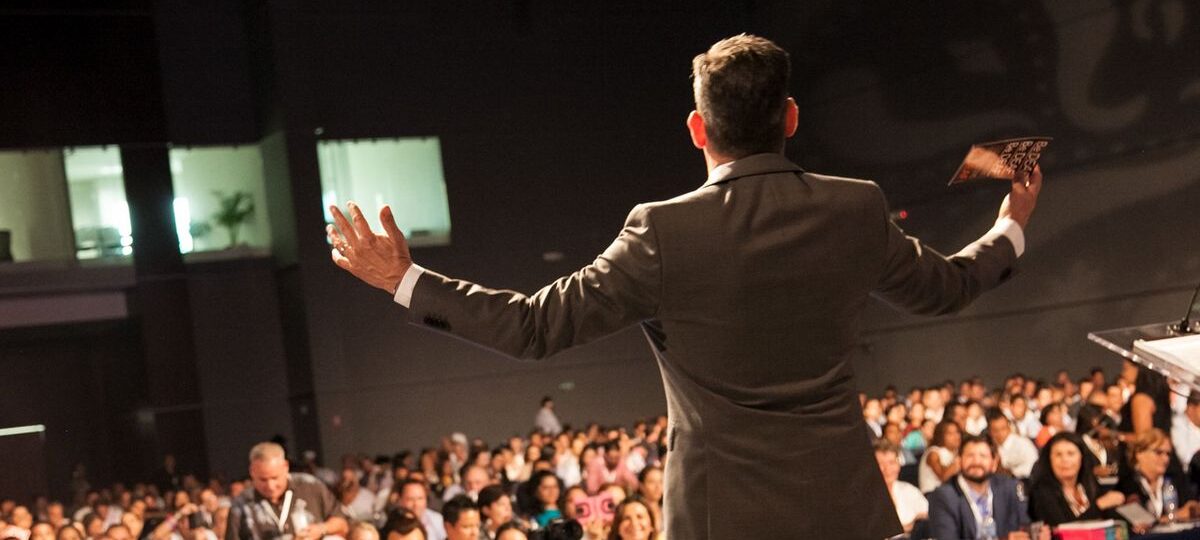
The Psychology Behind Great Public Speakers
The Psychology Behind Great Public Speakers
What Makes Great Public Speakers
Why do some people go onto a stage and immediately captivate everyone’s attention, whilst others struggle to keep an audience interested?
Is it a natural talent? Charisma or intelligence?
The fact is that exceptional public speakers aren’t born with amazing skills. Behind every memorable speech is a complex blend of psychology, preparation, emotional intelligence, and taught behavior.
Whether it’s a CEO encouraging employees, a teacher inspiring pupils, or a leader addressing thousands of people, the concepts that underpin good speeches are firmly based in human psychology.
Understanding these principles can help anyone become a more confident and persuasive communicator.
In this essay, we’ll look at the psychology of outstanding public speakers and identify the mental patterns that distinguish ordinary presenters from remarkable ones.

Why Public Speaking is So Powerful.
For thousands of years, humans have communicated via telling stories and giving speeches. Prior to the invention of books, television, and the internet, information was handed along by spoken word.
Our brains are inherently wired to respond to stories, emotions, and genuine human connection.
A great speaker does more than just provide information; they create an experience.
This is why powerful speeches can inspire movements, change opinions, and motivate people to take action.
The Science of First Impressions
Psychologists discovered that people frequently establish initial impressions within seconds.
Before an audience fully processes your words, they notice:
Your posture.
Your facial expressions.
Your eye contact.
You have confidence.
Your current energy level.
This is known as thin-slicing, in which individuals make hasty decisions based on insufficient information.
Great public speakers understand this, which is why they walk confidently, smile naturally, and establish eye contact immediately.
A strong first impression helps the audience trust the speaker before the actual message begins.
Confidence is usually a learned behavior.
Many people think that competent speakers are never apprehensive.
In truth, even experienced speakers frequently suffer nervousness before presentations.
The psychological distinction is that they perceive anxiousness differently.
Instead, think:
“I’m scared.”
They think:
“I’m excited.”
According to performance psychology research, reframing worry as enthusiasm might boost performance since the two emotions have similar bodily reactions, such as increased heart rate and adrenaline.
Great speakers don’t eliminate fear—they redirect it.
The Power of Storytelling
The human brain loves stories.
Scientific studies suggest that storytelling activates multiple areas of the brain, making information easier to understand and remember.
Facts alone may be forgotten, but tales evoke emotional responses.
Great public speakers often use:
Personal experience.
Real-life examples.
Challenges and successes.
Humor and emotion.
Stories help audiences see themselves in the message, increasing engagement and retention.
Emotional Intelligence: A Hidden Skill for Great Speakers
One of the most significant psychological benefits of excellent speakers is emotional intelligence.
Emotional intelligence involves:
Understand your own feelings.
Managing stress effectively.
Reading the emotions of others.
Responding with empathy.
Great speakers are continuously observing their audience.
If individuals appear perplexed, they simplify.
If their energy levels decrease, they include comedy or a narrative.
If the audience becomes excited, they build on that momentum.
This emotional awareness leads to better bonds and greater impact.
The Psychology of Body Language
According to research, nonverbal communication accounts for a large amount of total communication.
Body language may either support or undermine your message.
Habits of Great Speakers:
 Stand upright.
Maintain open posture.
Use natural hand motions.
A genuine smile.
Maintain frequent eye contact.
Confident body language indicates authority and trustworthiness.
Interestingly, scientists have shown that adopting confident body language may have a favorable impact on your own attitude, helping you feel more self-confident.
Why Authenticity Prevails Over Perfection
One of the most prevalent illusions about public speaking is that audiences want perfection.
In actuality, individuals have a deeper connection with genuineness.
Small flaws may make presenters look more real and accessible.
Great speakers don’t hesitate to:
Admit your faults.
Share your personal problems.
Laugh at themselves.
Speak naturally, rather than sounding planned.
Vulnerability fosters trust because it communicates honesty and confidence.
Principle of Cognitive Simplicity
The human brain loves information that is simple to grasp.
Complicated language and excessive details cause mental fatigue.
Great presenters summarize their message by:
Use brief sentences.
Repeating vital concepts.
Avoiding jargon.
Information should be organized clearly.
This idea, known as cognitive efficacy, increases audiences’ ability to retain and trust what they hear.
Simple messages are frequently the most effective.
The Importance of Eye Contact
Eye contact promotes a sense of intimate connection.
When presenters create direct eye contact, audiences feel recognized and involved.
Psychologically, eye contact improves:
Trust.
Attention.
Emotional involvement.
Credibility.
Rather than scanning the room indiscriminately, experienced presenters focus on one individual for a few seconds before moving on to the next.
This gives the impression of having a conversation rather than giving a lecture.
Why Great Speakers Pause.
Many unskilled presenters are afraid of silence.
As a result, they hurry their presentations.
However, intentional pauses are one of the most powerful psychological weapons in communication.
Pauses enable viewers to
Process information.
Build anticipation.
Consider critical points.
A little period of quiet before delivering a compelling speech may greatly enhance its effect.
Confident speakers realize that silence is not empty; it is significant.
The Psychology Of Audience Connection
People generally gravitate toward others that resemble them.
Great speakers generate this impression through:
Using relevant instances.
Sharing our mutual experiences.
Demonstrating empathy.
Speak in everyday language.
This principle, known as social likeness, allows listeners to trust and connect with the speaker.
When individuals feel understood, they are more likely to accept the message being presented.
Growth Mindset: The Secret Behind Continuous Improvement
Carol Dweck, a psychologist, established the notion of a growth mindset, which holds that talents can be enhanced through effort and study.
Great public speakers adopt this attitude.
They do not view mistakes as failures.
Instead, they see each presentation as a chance for improvement.
Following each speech, they ask:
What worked best?
What could be better?
How can I connect more successfully next time?
This dedication to lifelong learning is one of the distinguishing psychological characteristics of exceptional communicators.
Common psychological barriers to effective public speaking
Many people suffer due of restrictive ideas like these:
“I’m not naturally confident.”
“People will judge me.”
“I always mess up presentations.”
“I’m not as good as other speakers.”
These negative beliefs lead to self-fulfilling prophesies.
Replacing them with realistic, positive beliefs can result in considerable improvements in performance over time.
How to Think Like a Great Public Speaker
To enhance your speaking skills, begin by following the behaviors of excellent communicators:
Concentrate on aiding your audience.
Accept anxiousness as natural.
Practice frequently.
Tell tales rather than reporting facts.
Use a confident body language.
Accept genuineness.
Every encounter provides valuable learning opportunities.
Confidence is rarely the starting point.
It is typically the outcome of repeated behavior and positive reinforcement.
Final Thoughts
The psychology of outstanding public speakers is not based on magic or natural skill.
It is based on a grasp of human behavior, emotional intelligence, narrative, body language, and the capacity to establish meaningful connections.
The finest presenters understand that while people may forget the specific words they heard, they seldom forget how those words made them feel.
If you focus on helping your audience rather than impressing them, practice regularly, and accept your real personality, you may establish the same psychological habits that make great public speakers so effective.
Remember that every expert speaker started as a beginner and just decided to keep speaking.
Frequently Asked Questions (FAQ)
What’s the psychology of public speaking?
Understanding human emotions, confidence, body language, narrative, and audience behavior is essential for good public speaking.
Are excellent public speakers born or made?
Most experts feel that exceptional speakers are created via effort, preparation, and ongoing learning, rather than innate talent alone.
Why do tales make talks more effective?
Stories stimulate many parts of the brain, making knowledge easier to recall and eliciting emotional responses from the audience.
How can body language influence public speaking?
Positive body language builds trust, credibility, and audience involvement while also boosting speakers’ confidence.
What is the most crucial characteristic of an excellent public speaker?
One of the most vital attributes is authenticity, since audiences intuitively connect with real and sympathetic speakers.