
Why Do Japanese People Never Waste Time?
Japanese Teachings on Discipline, Culture, and Purpose
The one resource that all people have in common is time, which they may use at any time of day. However, it appears that certain communities derive significantly more benefit from it than others. One country that is frequently mentioned is Japan, where time is practically revered. Meetings begin on time, trains run to the second, lines are neat, and even everyday activities seem purposeful. This brings up a question that is frequently posed globally:
Why do the Japanese never waste time?
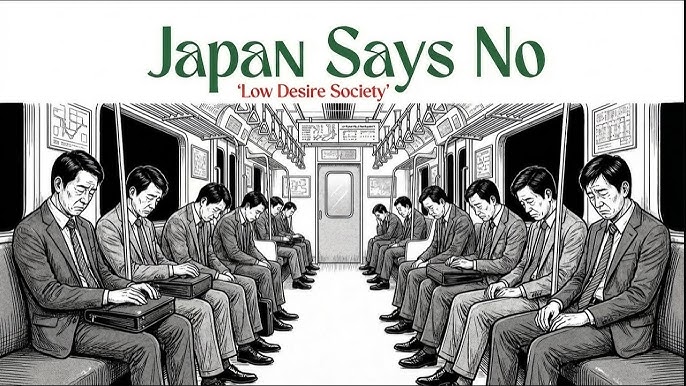
Why do the Japanese never waste time?
The solution is ingrained in societal structures, education, culture, and beliefs; it is neither straightforward nor genetic. The true causes of Japan’s remarkable time management and what the rest of the world may take away from it will be discussed in this essay.
1. In Japanese culture, time is a sign of respect.
In Japan, wasting time is regarded as disrespectful in addition to being inefficient.
You are not the only person who is inconvenienced when you arrive late. The Japanese idea of meiwaku, which means “causing trouble or inconvenience to others,” is rooted in this philosophy. A strong social motivation is avoiding meiwaku.
For example:
Being late for work is interpreted as being disrespectful to coworkers.
Project delays are perceived as burdening the crew.
A person loses a piece of their life when they waste their time.
This kind of thinking turns being on time into a moral need rather than merely a business practice.
2. Time discipline develops in children by the educational system.
Japanese time management practices begin in schools rather than in workplaces.
From an early age:
Pupils arrive to school on foot, frequently without supervision.
Classes start on time.
Instead of depending on janitors, kids clean classrooms on their own.
This teaches:
Accountability
Observance of common areas
Taking responsibility for one’s actions
Additionally, Japanese schools place a strong emphasis on structure and regularity, which instills a natural respect for time in the brain. Chaos and procrastination are not allowed.
By maturity, making effective use of time comes naturally.
3. The “Kaizen” philosophy of continuous improvement
The idea of Kaizen, or continual improvement, is one of the main reasons why Japanese people don’t waste time.
Kaizen encourages:
Rather than large, abrupt changes, little everyday improvements
Removing needless steps
“How can this be done better?” is a question that keeps coming up.
At work, this results in:
Process optimization
Very little idle time
Concentrated work rather than chaotic multitasking
Wasting time now is viewed as a missed chance to get better tomorrow.
4. Extreme punctuality in public systems.
An international model of time efficiency is the transportation system in Japan.
Consider this:
Train delays are measured in seconds rather than minutes.
If a train accidentally departs early, the business issues a public apology.
Workers bow and express regret for even little delays.
This degree of responsibility makes it very evident that time is of the essence.
People instinctively adjust to fit the rhythm of a culture that follows strict timetables.
5. Workplace Culture: busy but purposeful
Although Japan is sometimes blamed for having long workdays, there is a crucial distinction to recognize.
Even while karoshi, or excessive work, is a significant problem, people rarely take their time at work lightly. Workers:
Before meetings, make sure you are well-prepared.
Adhere to set agendas
Steer clear of pointless small conversation while at work.
Many people firmly believe that:
“You should be productive if you’re there.”
Social discouragement of idle conduct stems from shared responsibility rather than fear.
6. Minimalism Decreases Time and Mental Stress
Physical and mental simplicity are valued in Japanese culture.
From residences to workplaces:
Reduced interruptions
Spaces that are tidy and orderly
Tasks are well separated.
This is consistent with Ma’s philosophy, which views vacant space as useful rather than waste.
When your surroundings are straightforward:
Making decisions takes less time.
You pay closer attention.
You behave clearly.
Making time for what really matters is the goal of minimalism, not having less.
7. Prioritize Deep Focus Over Multitasking
Deep attention is valued in Japan, in contrast to many contemporary nations that promote multitasking.
This is impacted by:
Zen Buddhism
Crafts from the past (shokunin mentality)
Honoring mastery
A Japanese artisan may hone a single technique for decades. Patience, accuracy, and complete presence are all taught by this way of thinking.
Time stops seeping via distractions when you focus on one task at a time.
8. Social Responsibility Preserves Self-Control
In Japan, collective consciousness plays a major role in controlling social conduct.
Individuals ask themselves:
“How do other people feel about this?”
“Am I making the group move more slowly?”
This group mentality:
discourages indolence
minimizes needless delays
Promotes readiness
In Japan, time usage impacts the collective, which strengthens accountability, in contrast to individualistic countries where it primarily affects the individual.
9. Making plans is a way of life
Japanese folks make a lot of plans.
From daily plans to long-term objectives:
Steps are taken to complete tasks.
Time buffers are integrated
Contingencies are taken into account.
This lowers:
Chaos at the last minute
Deadlines missed
Inefficiency brought on by stress
Planning is viewed as liberation from uncertainty rather than as being inflexible.
10. Appreciating the Craft, Process, and Goal
A profound regard for procedure is at the core of Japanese time discipline.
Whether it’s
Preparing sushi
Coding
Managing a plant
Each step has significance. It is considered disrespectful to the craft itself to rush.
Time and intention naturally coincide when there is a defined aim.
Japan’s Teachings for the World
To avoid wasting time, you don’t have to be Japanese. Here are some useful lessons that everybody may use:
Value other people’s time just as much as your own.
Establish habits that help you make fewer decisions.
Concentrate on one thing at a time.
Remove any actions that aren’t essential.
Instead of responding, make a plan.
Honor the process rather than just the outcome.
Concluding Remarks
Time does not “magically” increase for Japanese people. They just have a deeper appreciation for it.
Their discipline is influenced by culture, morals, education, and group responsibilities in addition to coercion. In Japan, time is something to be honored rather than something to kill.
You will inevitably stop squandering time if you begin to view it as a sign of respect for others, your job, and yourself.


Pingback: hello world